Essential Skills for the End of the World
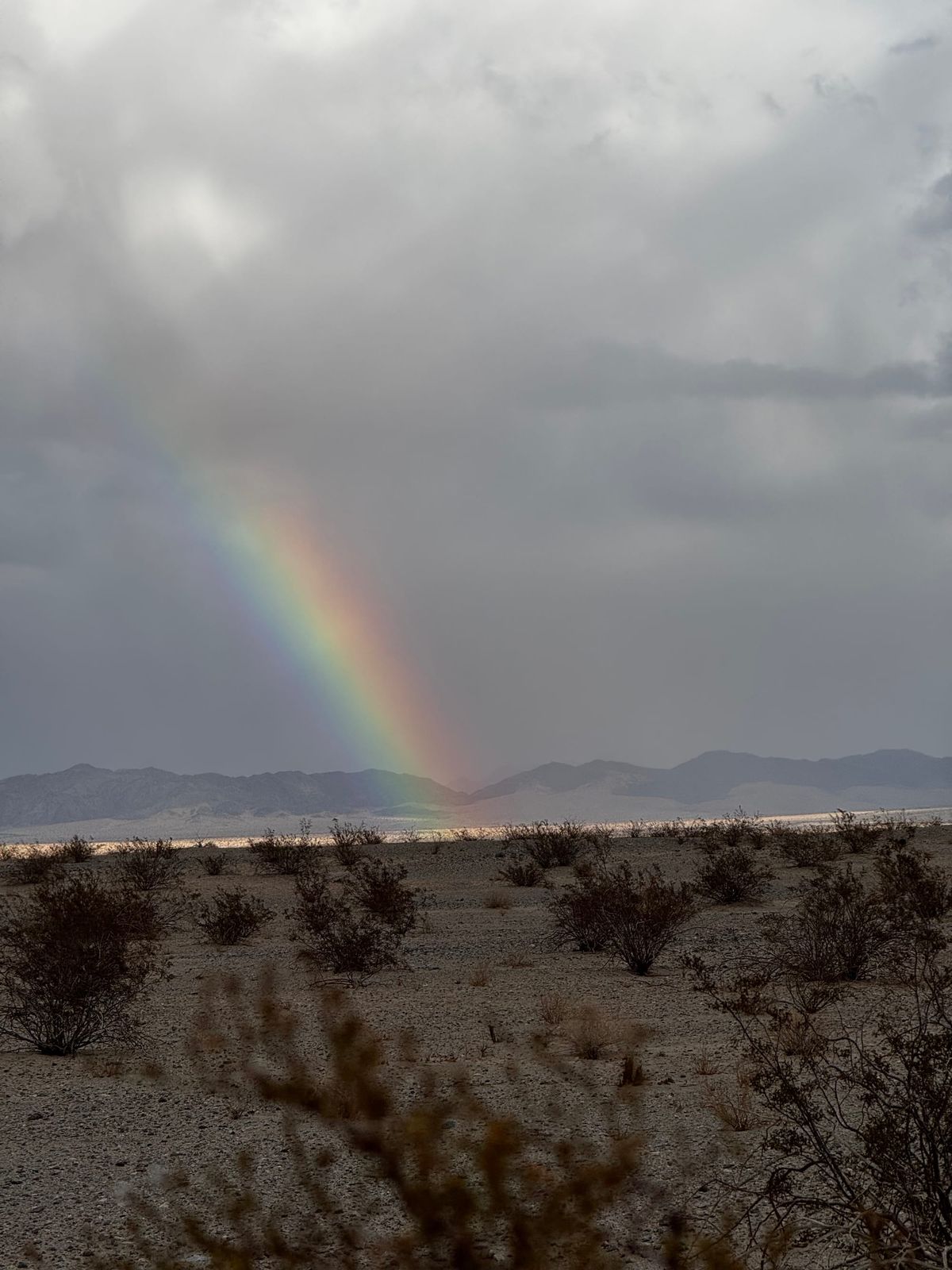
The end of the world, you say? Well, perhaps not exactly. For generations groups of people have looked at the chaos and instability all around them and asserted that this must be it: the end. And while we sit here today, after millennia of human existence, of human civilization, it might seem silly to think that now, once again, we are looking at the chaos all around us and thinking somehow we are special; that we are truly the ones to accurately predict that this is the end.
Though perhaps it isn't quite so silly. At the cusp of the fall of Rome, certainly its citizens thought it to be the end of the world. For tens or hundreds of thousands of them it was the end of the world: their world, their life. Whether they survived the collapse or not, collapse it did, and nothing would be the same after. So this is not some 2012 assertion that the entire Earth and all life on it will end[1], but yes, we are going to proceed with the assumption that for some of us life as we know it might, or quite likely will. Atop that assumption, we will discuss the primary two skills that are going to be entirely necessary for survival through this shift, and a few secondary skills that are also vital, though a bit more specific.
First, though, a note on "survival"
It has been nearly impossible as I plan this piece to not become a little philosophically annoyed at the very premise: how will I survive the "end of the world"?[2] Yes, you. You, who are the most special, the most worthy of survival, what if you did not survive the collapse of your civilization (or at least its decency and diplomacy)? The world would go on, as it has after the end of millions who this civilization has decimated for its own ends. While I think that attempts at survival are vitally necessary, they must always consider balance. We should not survive at the expense of our neighbors, for instance, and we'll get to that soon. The point here is that, while I wish to arm you with skills for the attempt, perhaps it is unwise to live our lives without the lucidity of our own mortality, our own shortness in the breadth of time on Earth, the debt we all must pay back to it after it has fed us for so long. We must try, of course, as living things, to survive, but perhaps in our minds we should do so in the interest of flinging forth hope for something greater to come after us and not solely with the selfish aim of surviving at all cost, like some Hollywood protagonist.
That we are in this predicament demonstrates, much like those Roman citizens we evoked in our example earlier, that there is a debt that must come paid eventually. That we are likely to be the ones to pay it, and not necessarily those who took the credit out in the first place, may feel unfair, but it is also not necessarily untrue. After all, how many decades of relatively comfortable and safe lives[3] have we led at the expense of those millions I mentioned above? It is not that we deserve to die for being Westerners, or American citizens, but just that it might happen after all, either way. Any collapse will necessarily incur casualties, and perhaps we should allow ourselves some lucidity in that without the assertion that we are the just ones, the moral ones, and someone else deserves to pay for their sins. Perhaps they do, but time will only tell if they will or if it will be us. And so, let us go forward, wishing to sow the right seeds, and not be an example of the hubris and extreme narcissism of the culture that has led us here in the first place, and consider all of this in all of our acts, as we approach the precipice of end.
Above all else: know thy neighbor
When Fey first asked the question that inspired this post, it centered around the skills specifically required to farm on degraded land in the instance of supply chain collapse or increasing climate instability. However, as I was making my detailed list of considerations in attempting to answer this question, something dawned on me: what if we're in a situation where a wildfire comes and decimates the pantry we've so carefully cultivated over years? What if all of the trees we plant are taken out by a hurricane? What if all of our livestock die in a flood, or because of military occupation that intentionally decimates the food resources we painstakingly build in the interest of their victory? What of, simply, the fact that farming itself requires many hands at times?
The response to this was answered, as I've planned this piece, in part by the experience of this past weekend, during which we processed the first hog we'd raised on site here at the Ranch. What was so impressive about that experience was that so many people showed up to help, including neighbors that we've become quite close with who have experience with such endeavors and who were invaluable in ensuring we avoided the kind of beginner mistakes that are... well, intolerable in such a situation. It reminded me that when we had conflict with our other neighbors that threatened to turn violent, when we've had issues with the well, every time there's a power outage, when our other neighbor's husband died; who have we been supported by and supported in return? Them! The people who live here, right next to us.
And so after all of my deliberation I have decided that the first, most primary skill we all absolutely need for the end times is the ability to collaborate with other human beings. Part of this, unless you literally live miles from the nearest other human being (though perhaps especially if you do) is getting to know your neighbors. Befriend them.
Yes, even them. Especially them, the ones you think you're better than, the ones who have the flag flying outside their house that you hate, or the loud dogs or the junk cars. Maybe they'll refuse a relationship, but my guess is you haven't tried. When we moved in we brought every neighbor that was reachable a loaf of bread and gave them our phone number. "Hello, this is who we are. This is what we're doing here. Let us know if you ever need anything."
Now before you think this sounds idealistic or completely ridiculous, consider that your single greatest asset if there's a fire, flood, or acute threat to your life is going to be the people around you. If you demonstrate time and time again that you will genuinely show up for the people around you, they will show up for you in return, especially when it really counts. Maybe they'll gossip. Maybe you'll find that they really are an acute threat to your life, and that's really good information to have! Maybe they'll not agree to get your mail when you're out for a week, but I can almost guarantee that for all but the most sociopathic of people (who are much rarer than you think), humanizing yourself immediately is going to be an incredible asset. Once you've brought someone bread or jam or flowers or vegetables from your garden and offered to help them if they ever need it, they are much less likely to leave you stranded in a burning building or on the roof of your house in a flood, and much more likely to create mutual support. Try to meet every neighbor, but even if not all of those relationships work out (we really don't engage with most of our neighbors very often) you want at least one of the nearest six houses to contain someone who will show up at your house if someone attacks you, or call someone if they don't see you around for a while and think something's wrong, or call you if you're away and something weird or terrible happens. You also, especially if you're going to take any of the other advice on cultivating food in this post, going to want at least one neighbor who won't call the cops on you if your pig or dog gets loose (which will happen at least once if you really start farming for real).
Part of relationships: sharing
Part of this whole collaboration business is sharing. Demonstrate that you are willing to offer what you have, even if you don't have a lot. Do not wait until you have a stockpile (this could take decades, truly) to share produce from your garden, or eggs from your chickens, or meat from your freezer. Answer questions when people ask how you do something, and answer them genuinely. Knowledge has exponential benefit within a community, much like the spreading of seeds. Share as soon as you have more than you need for your own table that week: that arugula plant will make more leaves than you ever want to eat. Those nopales will never stop producing too many new pads for you to clean. Those trees drop so many seeds. Do not force anything on anybody, always ask: do you want some eggs? Our extra loaf of bread? Some pork? Do your dogs want bones? Feet? Could you craft with this wool? Do you drink milk? Would you like to forage with me this weekend?
Sharing is always one of the most immediate ways to build trust and forge bonds with other people. Do not expect reciprocation, but find that it will often come anyways. Never ask for money, not if building real relationships is your goal. Never put yourself in a position to ask for help from someone if you've never offered anything in return, or never intend to.
Watch the world like a child
At this point you may be asking if these are survival skills or moral lessons, to which I may respond that perhaps they are both.
Truthfully, though, in order to answer the question "what are the primary skills someone needs to have should they be thrown into the work of sourcing or cultivating their food on site in the event of supply chain disruption or social or ecological collapse?" I need to have so much more information about what we're dealing with in that person's ecosystem. Is there wild game that is abundant enough to hunt? How much rainfall, and what other water resources are clean, abundant, and accessible? What weather conditions are we facing? What season is it? What resources do we have around us in terms of soil, other farmers who can sell or trade livestock to us, intact infrastructure, neighbors, land? What state is the usable land in? In this circumstance, is it enclosed or are we assuming that property ownership is secondary to community survival in this moment?
Furthermore, what is the primary factor of land degradation in this area? Recent wildfire, flood, mining, urban development?
Some of these considerations will be dealt with later in this post, but for you to answer these questions you must cultivate, before food or any other skills, the capability to observe each and every thing around you in its entirety in order to understand what is available to you, what needs improvement (and how it can be improved, and what it will take to do so), and what is completely unavailable or strictly constrained.
One thing I've noticed about my own children is that when they ask questions, they are not constrained by social taboo or the fear of being thought to be stupid or the kind of discrete, categorical thinking we're taught to employ in school. This is obvious, maybe, but in practice it's actually kind of wonderful. They'll ask questions like "why is that butterfly flapping its wings but not flying?" to which I'll open my mouth to give some immediate, seemingly obvious answer, and then stop and actually watch what's happening and consider the question more. I'll recognize that the butterfly is drinking water from the ground, and think: "is the wing flapping a function of the drinking, or is the butterfly perhaps opening its wings periodically to tell nearby birds it's still a big yucky monarch and not to eat it while it's stationary?" These questions – never considered if I evaluate the world categorically and as though I already have all the answers, as we tend to – open up greater questions about the actions of the beings around me, which lead to revelations that sometimes have critical implications for the garden or other aspects of our life here.
You must pay attention to what is around you. If you live in the city: what vacant lots are around? Does anyone ever visit them (city workers, etc.)? What state are they in? What grows there? Are any of the pioneers taking over the lot edible, or medicinally useful? What are they? What characteristics do they have? Do you see these same pioneer plants elsewhere? What does that location have in common with the other? Where does the water in the city come from, and what condition is it in? How abundant is its primary source? What are the implications of heat island effects, building shadows, landscaping, chemical application, foot or bike or vehicle traffic, laws, ordinances, or surveillance on potential food cultivation activities within the city limits? What land is accessible just outside of the urban area? What questions above apply to that land? What birds, rodents, or insects do we see within and without of the city? What value could they have as a food source, and how concerning are they as a vector of disease?
If you live in a more rural or suburban area: what is the general ecological state of the surrounding land? How enclosed is the land? What state of degradation is it in, or is the ecosystem relatively intact? What trees are native, and which grow the fastest? Which trees provide food sources? Habitat for birds? What game is available? How abundant is it, and what does it rely on? Could we help make more of it by providing more of its native habitat? Safe zones for reproduction? What disease vectors are around, what critters that are likely to demolish a garden? How can we regulate this in a non-destructive way while we pave the way for more species balance?
Obviously these are just a few of thousands of questions you could ask yourself on a daily basis, on a walk around your area, or while sitting in your backyard. These are good questions to ask those who are both older than you are and who've lived in your region for longer: what do they know? What changes have they noticed in their lifetime?
Some questions have obvious answers, some not so much. Sometimes you can find the answer one season, and three years later it's entirely different, either based on the ecosystem you've created or other changes, or because perhaps you were wrong the first year. In this way, we can never stop being thoughtful and observant, or calibrating our actions according to how things actually are and not just how they were five years ago, or how we think they should be.
With careful cultivation of this skill and the tangential ability to seek out the knowledge that answers some of these questions, it is possible that you could hypothetically be dropped in an entirely alien ecosystem tomorrow and still create a thriving and vital existence that honors the balance of that ecosystem if you start off with childlike consideration of what's happening there before projecting all of your own desires onto it first and foremost. Even better, however, to start where you already live, right now.
Secondary skills: hard skills for subsistence living
When I say "hard skills" here, I'm not necessarily saying that these are difficult things to learn (though all take some practice), but am using this as the antonym to "soft skills", a category into which the above two primary survival skills fall. The subsections in this section are going to tackle briefly some of the most important pragmatic skills one should have if considering either that one should start being prepared for potential social or ecological collapse now or a scenario in which one must begin this work from scratch right as it is happening.
These skills build on one another. For instance, foraging is going to be vital in some cases because farming takes time, and it's likely that your first yields won't necessarily feed you unless you're living in truly the best of potential ecological circumstances.
Because these skills are varied, and because they do take some work, time, and resources to hone, I will reiterate that forming mutual networks wherever you are right now (as opposed to waiting to create the most perfect intentional community someday, though that can still be a future goal) is going to be an asset no matter what your specific aspirations. Someone, somewhere near you, has a skill you do not have already and you would do well to figure out what they cannot do or what skills they do not have that you do so that you two can begin some kind of mutual exchange now. It really does not need to begin with both of you "getting on the same page" about the state of the world. So long as you're capable of forging a relationship based on mutual exchange, in this particular instance, it need not necessarily matter so much if you agree on the particulars of why this exchange is useful to either of you.
Hunting and butchering
That I rank this first in the list of hard skills for survival is not accidental, nor intended to be an insult for those with particular dietary preferences. Quite frankly, in all but a handful of places in the United States, it is likely that if there truly were a scenario where your local grocers were all bombed and you needed food right now the most effective way to meet your caloric needs is not going to be going outside, planting a few seeds, and waiting three months for a harvest. Nor is it likely to be (again, barring a few ecosystems within the current "national" boundaries) foraging in the forest, though that will come next. It is likely that the most efficient way to keep yourself and your loved ones alive is going to be going out and killing one or another relatively invasive or native/invasive species of animal that is overabundant: pigeons, rabbits (in some areas), squirrels, whitetail deer (in some areas), and the like. Or, harvesting animals you've begun keeping in the case of this or a similarly drastic scenario.
I would be the last to advocate for the kind of "paleo carnivore" diets that have become en vogue for "anti-vegans" on Instagram. Quite frankly, humans have always relied heavily on plants in most ecosystems in the world, and meat was harvested thoughtfully and with great care. Three meals of meat a day is a relative abomination, especially at the quantities of food that most Americans eat throughout the day, and particularly for ecological well being (and the human digestive tract). Even Yupik peoples in the Arctic region would have eaten steadily, small meals through the winter outside of feasting occasions, not gorged themselves on pounds of fish and whale a day, and they are probably the most geneologically tied to a "carnivorous" diet, at least seasonally, of all of the examples of cultures we could come up with.
However, most humans throughout the world have understood also that meat and other animal products are among the most calorie dense and nutritionally complete foods available, and when the concern is scarcity and not over-abundance of processed or horrifically produced foods, considerate killing and consumption of animals is a vital and intentional survival strategy.
Ultimately, especially in severely degraded or unbalanced ecosystems, the availability of produce will be seasonal or strictly constrained. Consider an urban example: would you be able to eat your lawn? Most of the trees being used for landscaping? No, but perhaps if you start raising some rabbits they could live on your (hopefully chemical-free) lawn (or the weeds in the nearby vacant lot) while you set up the cultivation of tree crops and annuals, build soil with their manure, and seek out seeds to begin growing produce. While many constraining factors may exist (like what to do when winter comes if storing food for your animals hasn't been an ongoing strategy) and need to be considered in each case, it is likely that beginning a small flock of chickens or colony of rabbits is a better survival strategy than just starting a garden, either as a primary food source or a fallback in the event of unexpected drought or other weather events. In years where crops are not yet ready to harvest, don't yield very well because the soil has not yet been rebuilt, foraged food items are not abundant, or other such events occur, chickens, guinea pigs, pigeons, and rabbits can survive on the things we cannot eat and in turn provide us with manure for soil cultivation and food that maintains us in the meantime. And in such years, if an icy winter truly does render the raising of domesticated animals impossible because they do not have a food source, either, then the sourcing of wild game becomes the only strategy for getting through the winter unless you already have a significantly stockpiled root cellar (the stocking of which should also be a goal in a cold climate).
So whether you like it or not, if the answer to "could I survive in my ecosystem as a vegan if I could not access a grocery store tomorrow" is "no", and if you would like to survive such an event should it occur, I would personally recommend beginning to research which domestic animals would do well in your climate, with the infrastructure you would be able to set up for them, and ideally with the food that is already available or would be available should your supply of commercial animal ration be cut off for some reason. Alternatively, if you oppose the idea of animals in confinement (which is respectable), I do believe the more ethical alternative is always going to be hunting over-abundant game if such is present in your environment. We do not have this luxury, but many of you probably do have abundant or even problematic populations of deer, rabbits, squirrels, or pigeons in your environment and would only need to know how to hunt and then process them (and perhaps practice a few times) and not necessarily make them a dietary staple right now for this skill to be an incredible asset in the event of collapse.
A final note: I've mentioned animals that lots of people don't really see as being "food" or having food potential. I specifically mentioned the species I did because they tend to become invasive where humans have removed their natural predators, and as such are generally going to be sustainable food sources in an emergency situation without much consideration. In the event that we are hunting to survive, and not for pleasure or prestige or our own personal culinary taste, these would be the species to go for. If you're in Northern Michigan, or Alaska, by all means try to grab an elk or a caribou or something that will last you all winter, but if you're most other places that have been urbanized, desertified, deforested, polluted, or otherwise destabilized, you might need to overcome your socialization that tells you that "only the dumbest hicks eat squirrels" and realize that the reason "those people" have that reputation is because those are people who've been living a subsistence lifestyle because of structural poverty, not because they're less intelligent than you. Likewise, guinea pigs, rabbits, and pigeons have been staple foods in many places in the globe for millennia precisely because of their fecundity and efficient use of foods that are of relatively low value or inedible for humans.
Wild foraging and plant identification
If we are assuming that we are going to be farming with no inputs available to us but the rain, the soil in its current state, and the animals on the land either that we're rearing on what that land provides or that are wild and abundant, we must not only know how to garden those 120 or so species of food crops we typically eat, but tune into other options for cultivation that can feed us given the state of our land right now.
In this vein, wild foraging and plant identification are both independent survival skills as well as part of farming in degraded land: we would do well to know what to selectively propagate that is already present, fast growing, and edible in our ecosystem. If we have a stockpile of typical cool-humid climate annual vegetable seeds (tomatoes, peppers, eggplants, potatoes, etc) and have the luxury of great soil for growing them, wonderful! We can skip a few steps and eat the way we're accustomed to. However, if that is not the case, we must make some adjustments.
It does us well to know in our ecosystem, for instance, that the common native mesquite trees provide high-protein leguminous seed pods in early summer and sometimes also midwinter. It also does us well to know that the native prickly pear cactus (we call it nopales) produces both edible young ears and edible fruits, as do the tree chollas that still persist in some places. All of these plants are fast growing, seasonally abundant, and we could easily propagate them as we go through collecting some for food. In your own ecosystem, there may be foods like acorns or groundnuts (Apis americana) which are extremely high in protein and other nutrients but which also require a little bit of foreknowledge about preparation and appropriate collection to ensure they're safe to eat.
There are other considerations as well: we may want to see what tends to grow together, as many plants help balance conditions for one another. Some are host to the predators of common pests for the other, some are the host to beneficial pollinators for the other, some help make available certain soil nutrients or absorb excess of others (Atriplex polycarpa in our ecosystem has a salt-reducing effect as it absorbs the salt from both the water and the soil, and this is beneficial to many of the ephemeral annuals that like to grow right by it).
Learn to live without electricity before you need to
It doesn't matter if you have the best solar panel setup on the planet, in a true crisis where supply chains are disrupted, you're going to want to understand how energy flows naturally through ecosystems and utilize methods of harnessing energy that do not rely on electricity. The grid could go completely down, a fire or other massive weather event could render all of your batteries and inverters totally useless, or gas rationing or a total shortage could render your propane generator a liability. Don't wait until one of these things happens to lament that your tools, your methods of food preservation, and your heating and cooling systems rely on electricity or petroleum byproducts.
Consider which animals and plants utilize solar energy to produce things that can in turn provide the fuel for the things you currently use electricity for. Pigs turn tree by-products like acorns and fallen fruit into lard, which is an oil that can be used for cooking or burning in a lamp. Bees use the energy stored in flower nectar and pollen to produce wax, which can be used to make candles. Cows turn the solar energy that has been stored in grass into food, clothing or shelter (hides), fuel (dung) and tools (bones, hooves). Trees convert solar energy into lignin (wood), and can be pruned or coppiced for fuel for cooking or heating.
It is valuable to understand how to can, smoke and cure meat, and dry or cellar vegetables and fruits to store them long-term (or at least for a season or so). If your food preservation relies on freezing and refrigeration, it isn't going to withstand any likely crisis.
It is also valuable to take an inventory of what you do that uses electricity, and consider what it would take for you to completely stop using that thing. If your day job is on a computer, fine, we're probably assuming that in a real crisis that's rendered totally useless anyway. But think about what your stove uses, and if you know how to cook over a wood fire instead. Consider lights: would you know how to make lanterns or candles if you couldn't buy them? Where would you get the wax or oil? Consider heating and cooling: how could you avoid using the air conditioner in the summer – planting trees around your house, creating a better ventilation system, creating a shelter that's partially underground or covered with earth? Likewise, what about heating? If you use central heat that relies on natural gas, do you already have a fireplace? Could you install a wood stove?
For farming specifically: don't rely on automated chicken coop doors and "smart" lights. Just build a regular coop that can't be hacked and that doesn't rely on electricity. Don't expect that your misters will work, or your fans: if your animals are going to be too hot if those things go out, you need to figure something else out before that happens. Think about water: what if pumps go out? How do you water your livestock or your plants? Do you have a backup plan?
Understand how water moves
Speaking of water, it is going to probably be the primary limiting factor for survival in the event of any kind of major supply chain or energy grid disruption, global conflict, or climate event. I would consider storage, rainwater collection, setting up greywater systems, and then think about how you could move and filter your water source without pumps or electricity. This is an area that, in our current ecosystem, we're very underprepared to manage. If the well pump were to go out indefinitely because of an energy crisis, we have the materials to set up solar and support the water supply for this community of twelve or so homes for a while, but on days where the sun doesn't shine we'd be pretty much out of luck. Rainwater collection during monsoon season could supplement the well, but not actually replace our reliance on it, and so a deep level of acceptance of our inability to survive without outside help would be warranted: we could not grow most things without irrigation, and so farming here would become non-viable unless climate patterns changed significantly.
Consider how much rainfall you get per year, and in what season if it isn't consistent. Consider snowfall and how many months things are frozen. Lay pipes below the frostline, and consider what it would take to store, heat, or thaw water in the winter if you live in a cold climate. Use gravity to move water wherever possible. Living on a slope is actually a huge advantage if you can manage the risks of erosion (and ideally build a structure into the slope or one that doesn't rely on a static concrete foundation). Think about supplies for collecting rainfall, including for livestock and plants: digging ponds using the methods of Sepp Holzer seems like a huge asset, and something we'd love to do should we ever have land elsewhere. Stock up on cisterns, and research what roof materials are safe for rooftop rainwater collection. Any new buildings that you put up, including shade structures for animals can be roofed with tin or something else safe and fitted with gutters and cisterns. Make sure you have a way to flush the first collection, and to filter the rest.
Learn about seasonal seeps, springs, and streams, and do the research to figure out how these could be used for bathing, watering animals, strategic planting of crops without irrigation, laundering, and so on. Think about how in a pinch you could get emergency drinking water from them: what quick filtration methods would be viable given your understanding of contaminants in your water table currently? How might those contaminants change? Would you be able to adapt to this?
Everything else
These last skills are not the least important, but they are more specific, so I'll mostly just list them, because I wish to simply place them in your mind for now.
You don't need to be a soil scientist to farm, but you should have some awareness of what good soil looks like and how to mimic natural cycles of decomposition in order to achieve the development of new, fertile topsoil. This takes time, and in any ecosystem that's been particularly disturbed can be expected to take years. This is where keen observation of what is already growing well in your conditions is vital: allow species succession to take place, and have a backup plan for feeding yourself in the meantime.
Learn to use everything. Get over your hangups with things that are "gross". Learn to eat offal, learn to use compost toilets, learn whatever other important skills would be vital to survival if stores were not around. Sinew becomes rope and thread. Bone becomes dowls, knives. Stone becomes arrows. There is a good kind of wood for cooking and a good kind for making arrow shafts and bows, or for building structures. The hair from a bull or a boar can make a brush for cleaning or grooming. Learn to not throw anything away. No one will ever be an expert at butchering and canning and rope-making and fishing and brush-making and bow-hunting and basket weaving and gardening and so on and so forth, but think about what is the most useful and what others in your available network cannot fulfill and start there.
Begin understanding when your frost dates tend to be, and if you can even start marking the first and last frost on your calendar to build data with which to assume averages. Pay attention to lunar cycles, and how these influence plants (if they do in a noticeable way where you're at). Worry less about creating sterile "experiments" and more about creating useful schemas of information in your head. If you find yourself making an attribution error, adjust, and get over it.
Ask around and get to know what the common "pest" animals and insects are in your area, as well as common diseases (fungal or otherwise) that plague certain plants. Consider ways to either rebalance or redirect these factors as you start to farm, or avoid planting the plants that are most affected by these things. Cultivate that which eats the thing that plagues everything (chickens are great at devouring grasshoppers, but not so much crickets, who are mostly nocturnal). Assume you have no access to vinegar you aren't making yourself, diatomaceous earth, or these other "quick fix" things people use to maintain their garden. Assume you're working well within the regulating factors we're supposed to be up against in our ecosystems (and some that are the result of gross imbalance caused by development or pollution). Consider how, given those constraints, you would manage to cultivate food.
Putting it all together
At the root of all of the skills that I've mentioned here are two primary things. First, build a network of people, and cultivate relations within where you already live that are going to be supportive of collaboration should the proverbial shit hit the fan. Within this network, evaluate everyone's skillset. This can happen quietly – you don't need to call a meeting and terrify everyone with your doomsday plans, just get to know people and think about what they have and what they know. Bill, who's always scared you a little bit but who's probably a half decent guy, can clean a deer in like twenty minutes. Fernando obtained citizenship by being a medic in the Marines and you want someone dropping you on his kitchen table if you get gored by your first goat. The point is that as you take the time to get to know the people around you, and listen to their stories and get to know their interests, you'll find out who's good at what and start to get a good idea of who you could lean on – and support – even before a crisis happens. Do the same with your current friend group and family members. Start offering help, and being a more engaged part of your communities of support. Let people teach you things.
Additionally, learn to observe the world around you in a completely open way. Pay attention to weather shifts, frost dates, the moon and the sun and how they move through the sky throughout the year. Pay attention to where water pops up, what animals you see, what insects, and in what season. Learn about animal husbandry, and think about what you have available to you in the landscape around you.
As you do these two things, and perhaps dabble in beginning some composting or land cultivation, you'll find that many of the other, more specific skills start to follow. Whichever don't come organically you can seek out resources for learning or researching now, before you need them. Almost all of the skills I've mentioned here are useful for not just survival, but leading a more ethical life that demands less of the infrastructure of an oppressive society, and one which seeks collaboration and mutuality rather than individualist tendencies.
Happy reaping, fellow sowers! Until next time ~
Notes
- Though, looking at the timing of certain technological innovations one read could very well be that whoever interpreted the Mayan calendar in the way they did was correct, that the world as humanity knew it did end in 2012, and we are just now reacing the culmination of all of those advancements that we didn't really realize back then would be the beginning of the end. Or, it's all bullshit. Really however you want to read it is fine, it just felt worth mentioning a slightly more respectful read here.
- This is not meant to be insulting to the person whose question (which we solicited) initiated this discussion, this is a more general confrontation of the cultural concept of individuality and individual importance.
- Obviously there are significant degrees to the comfort and safety that any given US citizen (specifically being analyzed in this post due to current events) actually experiences, but despite that some of us have experienced war-like circumstances, none of us have experienced what, for instance, the Iranians or Palestinians have experienced repeatedly in the last 80 years, which is the constant threat of bombs in civilian areas, supply blockades, actual active foreign military occupation, and so on.