On Community
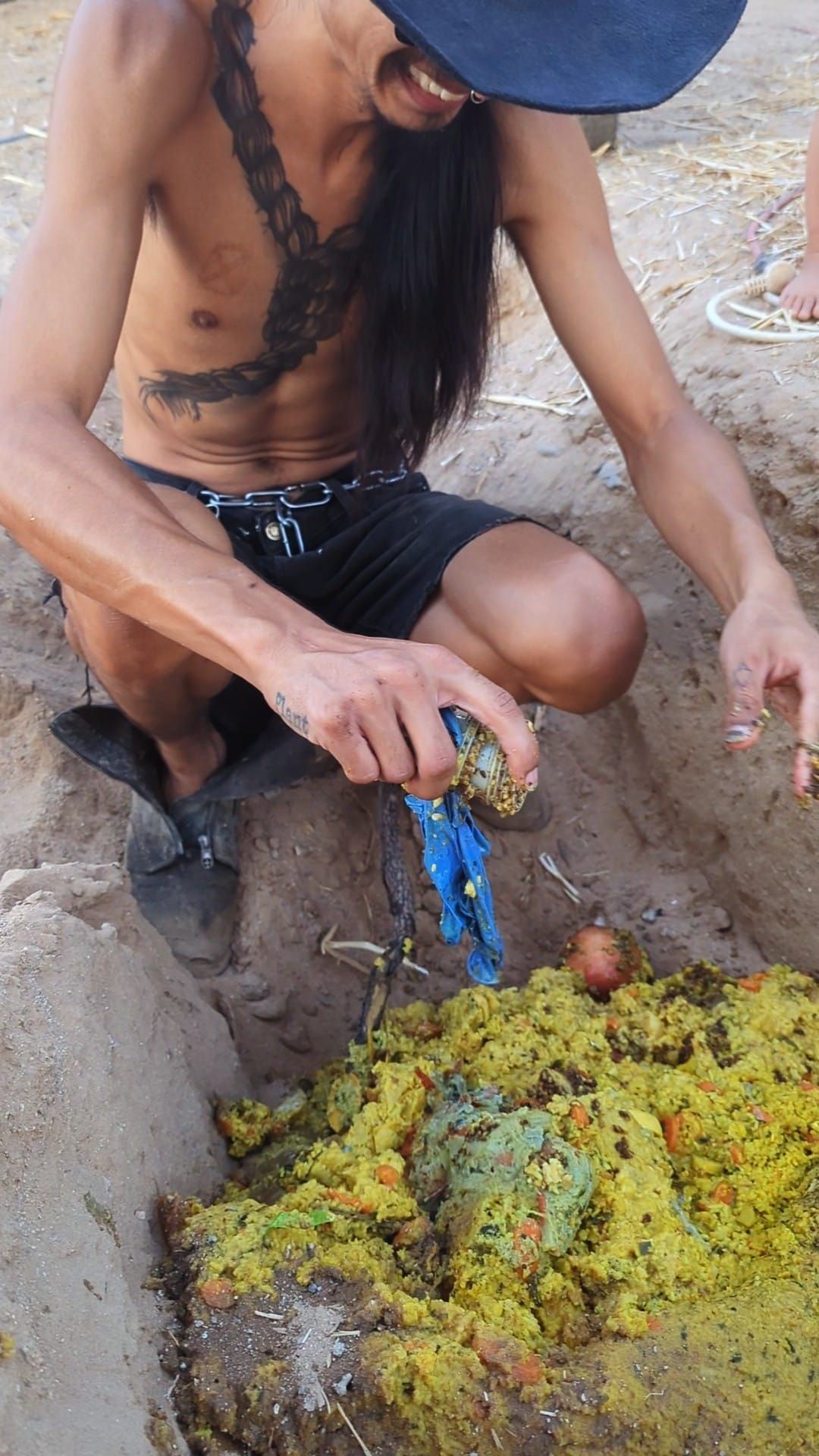
Community. This word encompasses many potential subdefinitions, and many of those in turn have their own emotional connotation depending on who you are and what your experiences are living with and amongst other people. Ultimately, regardless of the subdefinition, we can make some sweeping statements about community and its role in our lives:
Communities are implicit and organize whether we cultivate them or not. Our participation in such communities comes with both benefits and drawbacks, but generally speaking engagement in communities come with benefits that total independence or isolation does not.
We could define ourselves as members of several different, overlapping communities, though our level of participation may be ephemeral and situational in some or all of them. Examples will be given below, but the main point is that we are always in community with others to differing degrees, and it is vital to begin to understand and name our place in these different communities. It is within our place in the various overlapping communities we are a part of (or those we could or should become a part of, or those we wish to exit) that we are able to cultivate rootedness in terms of our "place in the world" or our purpose more broadly. It is also within this understanding that we can experience growth in a more supported way, and find our actions (be that activism, education, teaching, cooking, making art, etc.) amplified and begin to be contextualized and empowered.
These broad statements are the crux of why we have been wanting to talk about community as a topic for quite some time. This writeup is not just about live-in or intentional communities, nor our recent experience of hosting such a community for the last year and a half. However, we will bring up examples and anecdotes from our experience within different types of communities throughout this post as are relevant to sharing the knowledge we've gained from being deeply embedded members of several communities throughout our lifetimes.
Finally, before we begin, I wish to make a note of something. It may be useful to read Siin's treatise On Practice before diving wholly into this text. The reason is that it illuminates the context in which we analyze things such as human relationships: ultimately we see every person and being in this world as functioning pieces within a great whole. It is this lens which makes us passionate about evaluating movements within ecosystems and communities: we are looking to learn how to best cultivate collaboration in a very deep sense, because ultimately we are aware that we must learn to function in a distributed synchronicity whilst holding diverse roles, and being intentional and lucid about the tensions that exist between our roles and purposes if we are to align more fully with universal Purpose, right relation, and stewardship.
Definitions of Community
Broadly speaking, a community is a group of people with a shared fate. I avoid saying shared purpose here, because that is not always true: for instance, members of a geographically broad or very populous regional community (i.e: everyone who lives in your city) rarely work towards a single purpose, though there is some degree to which your fates are intertwined.
As we dig down into different types of community, we will see that the fates of the members within become more and more intertwined, more clearly overlapped and reliant on the actions of one another. There also, generally, as groups get smaller, becomes more choice: you cannot choose who lives in your city, for instance, but you may wish to choose who lives in your apartment or who participates in your activism group. Inversely, you cannot exile someone from your city (or, at least here in the US, that is very unlikely), but you can potentially make the choice to ask someone to leave a smaller community or collective. This will become important as we dig down into some of the topics related to community: I will do my best to specify under each heading what information being provided relates to which types of community, and answer some of the questions we've received in a way where I specify different answers for different types as well.
Regional Community
Regional communities are rarely organized based on shared values, though it sometimes occurs that because of shared interest in, say, regional economic activities shared values occur. Additionally, because of the reasons people end up in a place, shared values may also occur: this is the basis of shared culture, in a sense, but shared culture is not necessarily the same as shared values, though it overlaps. What really binds those in a regional community, however, is geographic space. You are in community with those in your state or province, your county, your city or town, and your neighborhood or rural district or area. While "back in the day", at least here in the US, people used to form pockets of their friends and family within different rural areas or neighborhoods through direct-selling property or convincing their relations to move to the same place with them (either from within the US, or as immigrants from elsewhere), it is more likely today that your relations with those in your regional community are retroactive: you go meet your neighbors after moving somewhere, usually not before. Additionally, increased necessity to "go where the jobs are" as well as flexibility with regards to where people can live or travel changes what a regional community is very much: where an entire town perhaps used to be relatively value-homogeneous, as regions experience influx or efflux of people from and to other places with different cultures, nearly every regional community becomes more and more value-heterogeneous, which changes its dynamic very much.
It is important to mention that there are different levels of regional communities, as vaguely mentioned above. The most granular is your neighborhood (or rural area), and the least is possibly your country, though once we get that large or larger it becomes hard to really identify the members of such a large region a community.
While the members of a regional community have a shared stake in some things; like their natural resources, economic viability, or the noise level in a neighborhood; in general individuality is greatly retained in these communities. At the smaller level of a neighborhood or rural community (and especially in the latter example), members of such communities may well rely on one another sometimes, but more than likely the every day experience of a member of a regional community is that the membership of that community is an implicit thing that doesn't require much thought or action except in times of severe strife or occasional gathering.
Interest Groups
Interest groups are broad, usually large groups of people who share a common interest or goal, but who may not all know each other. Generally speaking, there are usually smaller sub-groups within interest groups.
Some examples of interest groups may be:
- Members of a general political leaning, such as "leftists". A subgroup might be a small coalition of leftists in your region that meets up and performs actions.
- Members of guilds or trade organizations, where these members intentionally share knowledge or otherwise occasionally interact (i.e: the American Poultry Association)
- Members of niche subcultures, where there is broader membership than would denote an intentional community (i.e: "witches" are the broader interest group, especially where they're attached via online resources or other modes of information sharing, where a specific coven may be both a smaller interest group and an intentional conmunity).
It is at this level that we begin to see communities being formed usually on the basis of shared goals or values. In some examples, as in the political example, we can count on values being more closely aligned in many areas, or at least policed into alignment from within where minor differences occur in the areas relevant to group function. In others, such as the American Poultry Association, the group may define some values (i.e: how we treat poultry, how we orient to the keeping of livestock in general) or infer others (i.e: most people interested in poultry are those who share values of self-reliance or the importance of producing one's own food) which are not required or policed by the group but which are common because of the nature of the interest the community is based around.
There is a large range of size, however, when defining communities based on interest groups, and members may belong to one or more interest groups. For example, someone could be a leftist active in their activism syndicate and a member of a beekeeping guild and a member of an art scene or cultural center, and so on.
Because of this overlap, communities based on interest groups are sometimes, but not always, containing of a kind of ephemeral membership. Though some values may be proscribed or inferred, the interest itself is subject to change to varying degrees. Where members of a regional community are probably a little more static, members of interest groups may come and go more frequently, or change participation levels based on what the group's needs are and what else is going on in the individual's life. In general, individuality is retained for members of interest groups.
Cultural Communities
While this term is imperfect, also, it feels important to indicate that an interest group, where the membership is largely joining based on desire to some degree, is very different in structure than a community wherein the members are not necessarily choosing membership at all.
Cultural communities are sometimes regional, and sometimes not. For instance, Okinawans are both a regional community and a cultural community (and Okinawans abroad are also members of a regional community and a cultural community, but they would be members of a different regional community than Okinawans in their homeland). The GI's that occupy Okinawa are a part of the regional community of the island but not the cultural community of Okinawans. Cultural communities can include cultural groups which exist within a more common culture (the GI's in this example, or Santeria practitioners in the American South) and operate at any level of overlap. Not all members of a cultural community are necessarily going to know one another or share all of the same values, unless the culture is relatively insular and exists in a small region, and where emmigrant members are few or non-existent. For instance, among the Chicano residents of Southern California, many are left-leaning and non-religious, or left leaning but still Catholic or holding of their Indigenous religion, where many others are still Catholic and very conservative, and some are extremely right-wing and Christian. Among what could be named as Latinos of Southern California there is even more diversity, as now the cultural group encompasses residents of the state from (whether directly or removed by generations) even more countries in Central and South America.
Cultural communities vary greatly in the degree of individuality of their members, and usually this depends on many factors, including how insular their culture is and how spread their membership is across geographic space. In the example of Chicanos in Southern California, for example, whilst there is a strong sense of shared cultural identity even with others that you've perhaps never met, individuality is greatly retained and other than in small units within certain neighborhoods the culture rarely functions as an intentional community (though it subdivides into many regional intentional communities where neighborhood or familial identity is also very strong). Overlap occurs greatly here with the concept of communes or intentional communities: where cultures are insular and not spread across a large area, they function as an intentional community where rather than being based on something chosen they function based on cultural alliance and all of the shared spiritual and practical considerations therein. Where cultures are non-insular, very spread out, or diasporic, the cultural community as a whole is unlikely to function as an intentional community but small groups of members are likely to come together and form intentional communities embedded wherever they are in the world.
Commune/Intentional Community
Usually, an intentional community is defined as: "people who live together who share a common purpose and pool resources in an effort to attain to that purpose". However, in attempting to categorize different levels of community, I found any label I could give to something in-between the ephemeral, not necessarily entirely connected nature of an interest group or the intrinsic membership of a cultural community; and a community that is collaborating intentionally for a common goal or purpose felt redundant when the phrase "intentional community" is out there.
So, I hope you'll indulge me in rewriting the definition of the term "intentional community" for the sake of this post, since I could not come up with a better term that was as accurate. In this context, we will define an intentional community as a community that is cultivated purposefully by individuals who share values and a common goal or goals, with the express intention of achieving that goal/those goals. Membership is often much more dedicated -- there are stakes, and members can less easily "drop" or "move on from" the central thesis of the community. Sometimes these communities are live-in -- or they share a single domicile or place in space to reside -- and sometimes they are not. Such communities include covens, religious orders, tribes, land-stewardship collectives, cults and so on. To be clear: a yacht club is an interest group: there are shared values, interests, and a kind of ephemeral overlapping of the fates of its members, but there is not necessarily a shared goal, because the ultimate aim of each member is probably individualistic; while a permaculture collective which shares labor to grow the food for the group is an intentional community, because each members' fate is closely overlapped and reliant on the activity of the group, and because the aim of the group and its values are homogeneous among members. The point is not necessarily the number of members (though at scale this matters, because if not everyone can know one another it's likely fates are less overlapped and values are less aligned) that defines an interest group versus an intentional community, but the level of reliance and interdependence between each member and the work that's being done or the goal(s) being pursued.
Then there are communes, which is the word I think people should be using when they say "intentional community", though I think people are just a little afraid of that word which is why the term intentional community was co-opted for this purpose. A commune is a group of people who live together in a site and share resources. It is a live-in collective, or it shares a small geographic region, and must necessarily (if it is to succeed at its goals, at least) contain the most value-aligned members of all of the different levels of community that we are defining. Each member of a commune has a dramatically shared fate, and numbers should almost always be low enough to support face-to-face interaction and the humanizing and connection of each and every member, though exceptions exist (or perhaps cease to become communes at a certain scale and are merely tight-knit intentional communities which operate like villages). Some things are both: a cult is potentially a commune and an intentional community, though it could be just an intentional community (as Heaven's Gate was at its genesis, for instance).
Building Community (or Finding it)
Whether or not you ever leave your house, you are a member of a community on some level. Perhaps you are not the highest contributing or most participatory member, but you are a member nonetheless. Even those who live deep in the Alaskan wilderness far from any other human being are members of various communities, though those communities likely have much less impact on their life than the communities most of us are members of.
With that being said, when people ask us what it's like to "build community", generally they're talking about the communities one can choose: interest groups, intentional communities, or communes. Sometimes when we say "build community" we are attempting to seek out others in our cultural community and engage in more intentional mutuality and relation with those people, and sometimes we are looking to do the same with members of our regional community, though usually this takes the shape of forming either an interest group or an intentional community (i.e: building community in Detroit by starting an urban garden, building up the Chicano community in LA by hosting a group where elders sit down with younger people and discuss issues they're facing, etc.).
But how do we do this?
I won't go through the ridiculous myriad ways we can meet people, as I am sure this is already known. But generally, if we want to build an actual community, we should:
- Know and be able to communicate our goals
- Consider how those goals impact others (i.e: why should other people care? Are there other people who care about the same goals? Are there people with opposing goals, and how should we consider them?)
- Engage others with opportunities for involvement where opportunities are desired or being sought
- Once individuals coalesce into action together, consider what structure your community should take
- Continue doing your work
When in Community
Once we're aware of how we're embedded in different communities, we have to do the hardest thing: engage with other humans in a functional way that supports the desired outcomes for the group. This is easy where we are all being up front and are self-aware of our motives and behaviors. However, it is impossibly difficult where we are completely unaware of our actions, emotions, or goals, or where we say the same values or desires out loud but actually mean different things. Often we find that our contexts are misaligned, we aren't choosing our words carefully or we haven't actually thought about what it means to believe something that much. It is actually much harder to "just be clear" and "just be self-aware" than it sounds: and this is where, at least in our experience, most pain points come from in any community at any level.
"Good faith" interaction
One of the things that I often hear related to building relations with others or operating within communities is that we need to "engage in good faith". It feels like there's an implicit definition here, but what do we really mean when we say this?
Generally, when we say that we must have "good faith" interaction, or operate in "good faith", it means that we must, first of all, assume good intentions on the part of the other party or parties; and second, operate based on our own good intentions. In other words: I am engaging in good faith discussion with members of my community when I can sit down earnestly and broach a concern, and they are engaging in good faith when they can hear that concern and attempt to genuinely offer their input in return. We engage in "bad faith" discussion when, using this example, I broach a concern with my community member and they tell me I'm imagining things, where their intention is genuinely to attempt to sideline me and make me question my sanity. But here's the trick: the interaction can't stop there. If I am to also uphold my end of operating in good faith, I should not (unless I have really good reason to believe this is true) assume that this is what they're trying to do. We can look for areas of miscommunication: is what they are trying to say just that they haven't experienced the object of concern? Does the object of concern seem unlikely to them? Are they attempting to comfort me by offering an alternative (i.e: no, don't be scared of this new weather event, and don't imagine that it's more than it is, I've been here for 20 years and this just happens sometimes)?
The tricky thing about the concept of "good faith" interaction is that it, first of all, must apply to the entire interaction, and that it requires that we always attempt -- again, unless we have consistent history telling us why it's actually likely this person is attempting to do harm, or their behavior is transparently harmful -- to witness good intentions in the other. This is crucial in any interaction in any community, and I am extremely guilty of having a very hard time assuming good intentions from others due to my own personal history, which leads us into our next point:
What if someone can't or won't engage in good faith?
The reality is that there is unlikely to be a situation where two people are interacting and only one person is partially operating within their life based on trauma. In general, much of what shapes our communications in general is trauma: not necessarily major trauma, the kind that leads to PTSD or other major mental illnesses, but trauma as in all of those events that shape us in such a way that we are likely to assume negative intentions from others. One reason why it's almost impossible that any of us are interacting without this is that some of this trauma is actually just our socialization: if we're trained that other people are bad and that we have to look out for our own interests, as all of us in the US and much of the rest of the world are, from birth, then of course we're going to find it difficult to really engage in a way where we're always assuming that this is not true. Other interactions with people throughout our lives that in any way prove this to be true compound the effects of our socialization, and then major trauma of course adds its own flavor to the assumptions an individual is making when engaging with others.
I would almost say, based on my experience at least, that almost all of us have significant hurdles to engaging in good faith with others. Those of us with mental illnesses, including PTSD and especially those with forms of psychoses where their context is very different than yours even if all else is equal are, of course, facing more significant hurdles. But then, how would we deal with this in community?
First, it depends enormously on the level of community we're talking about. In a regional community, if there is a person who is not a member of a closer community who consistently engages poorly, unless there is a reason to not do this, we can just choose to not engage them or not bring them into our lower level and closer knit communities. This is harsh, and I know some of my readers will cry "but inclusivity!" and that's really wonderful, but I suppose I'm assuming here that we're discussing a person who really doesn't want to do anything differently or cannot meet you at the level that for some reason you want them to meet you at. In this case, I suppose I don't see the point of inclusivity when it would seem that the person perhaps really doesn't want to be a part of your community anyways, or where perhaps they feel unsafe interacting with you.
Now, if the person really wishes to be a part of what you've got going on with an intentional community, commune, or even interest group, and seems to be interested in trying to manage communications better (which, if they're really interested in being a part of the community, these are prerequisites and would likely be present), or if they're already a part of the group, then yes, we should try harder. However, paramount to all of this is that they want to. Ultimately if the issue is that someone just does not want to interact in good faith, you are not going to be able to force them to. We can try to engage them with patience and understanding, and utilize hierarchy to structure a group in a way where members who are consistently encountering difficulty engaging with the others in a conducive way can be offered some kind of mentorship, where resources permit, or offered alternatives when good faith engagement is impossible (during emotional outbursts for an individual known to have specific psychological needs, perhaps the expectations for them can be different in those moments than for others, assuming that when they are feeling more regulated they are required to uphold the same expectations as all others within reason). Within some groups: group therapy, prison church or reading groups, group homes, and so on, these different measures are necessary, and to a lesser degree they are likely to come up in any intentional community or cultural community, though in those instances it is up to the group to decide how they navigate members who are consistently behaving in a way that does not uphold the expectations of the group for communication.
If there is an absolute necessity for someone to be a member of a community, and any measure of introducing hierarchy (including mentorship, structured consequences, the ability to improve status or privileges based on positive behavior, etc.) or offering alternatives or cajoling is not working, what should we do?
First, there is a difference between someone actively refusing to engage in good faith, for which I would recommend exile (denying them membership to your community, removing from the site if your community is a commune or live-in one) because there is really no ethical way to force someone to change their mind; and someone who is incapable or having severe difficulty engaging in good faith due to legitimate psychological issues (including mental illness where diagnoses of such things are common). In the latter case, there are many reasons why despite continuous conflict or difficulty we may wish to still support this person as a member of our community: perhaps they bring something valuable to the group, perhaps we simply love them as a family member or dear friend, perhaps we feel it is our duty to ensure that we give space to a few such members so that they may benefit from the resources we can share. Whatever the reason, if your community is certain that this person is, first of all, consenting to be a member of your community and wishes to be there, and second of all, trying to be a good community member, then it's really extremely situational what to do about continued violations of this concept of "good faith" interaction.
This is not meant to be a cop out answer, but I cannot honestly propose anything more specific. The function of the community matters here: what is our goal? How does this member support that goal or benefit from it? How do they detract from it, or how does their behavior impact the other members? In a coven, for instance, perhaps we would employ some kind of spiritual support to support major trauma resolution. In a prison therapy group, perhaps we would offer an ultimatum: either demonstrate you care about engaging well with the group so we can all support one another's healing, or you have to lose the privileges (early release, etc) associated with group membership. In a permaculture commune perhaps we would request the person seek therapy for a time and return. The key is to determine what our roles are and be honest about our impact: we will all fail at good faith interaction sometimes. Where a member is habitually violating the principles of good faith interaction, though, we must honestly answer difficult questions around what support we can offer, what this person truly needs, and how these things impact all of the other members of the community as well as our shared goals.
Hierarchy and Unhierarchy
There are myriad ways in which humans have organized themselves historically, and intuitively, different modes of organization benefit communities of different scales, levels of homogeneity, and objectives. If we truly desire to allow space for communities to self-govern and optimize for their own best outcomes, ideology must take a back seat. For instance, anarchy only suits a handful of situations. Strict authoritarianism does as well, and there are instances where certain peoples have in times of either scarcity or abundance opted to shift towards or away from authoritarianism as a strategy to get them through lean times or prevent inner turmoil when excess resource had to be allocated. In these examples, leaders were chosen often based on reputation, and knew they were to be deposed when the time for strict rule was done[1].
And, of course, there are near infinite combinations of organizational strategies in between that can be employed situationally.
We've seen time and time again that the desire among 20-30somethings forming communes and intentional communities is to avoid hierarchy at all cost. We've also seen and criticized the odd hierarchies that inevitably creep up when we attempt to declare the absence of hierarchy, but instead impose a hierarchy no one agreed to.
But here the solution appears to lie in lucidity about what our group is and aims to do: there's a difference between mutually beneficial peer groups with skills that all suit one another's skills, and the reality of engaging in work in an environment where one, some, most, or all members are at varying levels of skill or capability. Where new members must be taught something, or if there is any kind of "probationary" or introductory period, a hierarchy is useful.
Ultimately, the level of hierarchy that benefits a community of any scale seems critically linked to the level of heterogeneity in certain identifiers within a group (age, expertise, physical ability, etc) that are linked directly to the work that must be done[2]. For instance, if we are to support a handful of members who are unable physically to do the necessary work of (as an example) growing food, some structure must be in place to define their role elsewhere. Now, you may argue that structure and hierarchy are different, and you're right, but here's the trick: when we have to allocate roles and manage expectations around divided labor, or enforce support for members of a community who aren't contributing in the same way as any majority of the others (i.e: more invisible labor vs. more obvious physical labor), we almost always need a hierarchy in place for decision making and the enforcement of support, expectations, and labor division internally. The same is true where some members know how to do all of the necessary labor of a community, and newer members are necessarily uninitiated and require training. In both examples, where hierarchy doesn't exist to enforce support and fair decision making, what tends to happen at least in our experience is the growing resentment of those doing the more visible, skilled, or taxing labor towards those doing "less" (in their eyes). This happens not just based on differences in physical ability, of course, but anywhere there is no hierarchy yet significant difference specifically in terms of role, relations tend to dissolve.
We can even see an example of this at the macro scale where the hierarchies in broad national society aren't in-line with the needs of members enough to keep these resentments from boiling over: we see white collar workers in cities or coastal regions viewing rural landworkers or blue collar workers as inherently lazier and less intelligent, and we see the inverse where blue collar workers see white collar workers as cheats and scammers. The reality is that both rely on one another for critical social functions at the national scale. This same dynamic occurs in smaller communities much too often -- usually no matter how "enlightened" and selfless its members think they are.
There are other considerations, of course. How do we make decisions as a group? How do we manage conflict? Glaring value-misalignments that are revealed? How do we manage resources? What structures are in place to prevent abuse either between members or by members of the group of its resources? How do we deal with members who chronically strain the group? How do we teach people when skills need to be taught? How do we orient to children and childcare?
The creation of hierarchy never solves every problem nor eliminates all conflict. It is merely a spoken, (hopefully) agreed to structure wherein escalation to the appointed higher member is possible when conflict proves too difficult to manage 1:1, or where mentorship is baked in, or where decisions about resource allocation musn't be unanimously agreed on each time a different set of resources arrives. Hierarchy brings in power dynamics (which, I'll point out, are implicit in all but the most perfectly homogeneous communities anyway) and of course can be abused. It is ultimately up to us to create structures in our communities that mitigate the creeping issues that will arise no matter what, and we will always miss something and need to be flexible enough to recalibrate.
The difficult part is, of course, deciding when to initiate hierarchy and how. Again, it is situational. People seem to do well creating hierarchies that work for clubs or interest groups, where the emotional stakes are lower and the roles of members are momentary, not those that define that member's purpose in life more generally. However, when we get into where we live (be it our village community, a smaller cultural community, or a commune) identity and ego get wrapped up in role and station and the wrong hierarchy can be just as damaging as a hierarchy that's missing.
A few final points on this. First, any authority introduced can be ephemeral. A community may choose a named Mediator, who for a period of time during big conflicts enacts conflict mediation measures (i.e: distance between two members, a cool down period where some members need to not speak, enacting a ceremony to bring everyone back together, etc) and therefore temporarily has more authority. However, this role would come with the expectation that outside of times of conflict the Mediator does not act as such until called on again. I can think of dozens of other potential examples of this.
Second, we, in our post-colonial world within the oppressive broader structures we live in fear introducing power dynamics in our intentional communities and communes. The thing is though that they exist anyway. We've seen a supposed anarchist art commune convey some very problematic racial and class-based prejudices in a hierarchy that was never agreed on but which pervaded the entire household nonetheless based on the status of who held the lease and who'd lived there the longest. If the house had created a hierarchy up front, though, where all members had value and understood the requirements of rising through the ranks, so to speak, most of the turmoil going on there could have been avoided (based on my analysis, at least, from being there).
Power dynamics are occasionally tricky to navigate but have a bad rap in postmodern discourse. As a parent, I have a dynamic of "power" over my children. There are dynamics of power between Star and I based on radically overlapping identifiers of differences in race, gender, earning potential, and so on. These are not intrinsically negative, though abuse potential does exist. We must be value aligned, have structure for conflict mediation, and have a shared fate and common goals in order to most often transcend petty emotional issues and ensure our family's success. Where these things are present in communities, up to a certain scale, it is relatively easy to get over conflict and find trust regardless of the existant power dynamics. We do need to name them, though, or at least understand them and the part they play in the movement of our community, because they'll play a role either way.
Consequences: hard decisions
So, whether we enforce a hierarchy or not, what happens when members of a community don't hold up their end, either from the start or they slowly stop doing so over time? How do we deal with conflict where mutual resolution isn't possible? What if the hierarchy we did put in place goes awry and becomes abusive?
In many of the broader communities we are a part of, with the exception of that last question, these things are decided for us. Members of economies that don't or can't normalize and "contribute" are maligned, incarcerated either in prison or mental health facilities, medicated, or bullied or intimidated into normativity. But what if we wish to do better in either our immediate regional community, our interest groups, or our intentional communities?
We must ultimately face hard choices when whatever positive reinforcement gleaned from active group membership or incentives fail: exile, punishment (i.e: privilege withholding), or continuation of relation without resolution. I am certain that there are other options, though in my experience when we face either abusive members, members who take advantage of others or the group, members who continuously refuse to do what's needed, or members who put the group at risk there are less options than we'd like. This all assumes that we've gone down every avenue of attempting to support this person, draw attention to their behavior and let them understand what will happen if they don't resolve, or that we're facing a situation where a member presents an active risk that warrants immediate action rather than extensive conflict resolution attempts.
Inversely, if we find ourselves in a community where the dynamics are no longer liveable for us, we face the choice of either staying or leaving, and both will have pros and cons that are more or less severe depending on what kind of community we're in and how tied in our fate is to the success of the community.
First of all, where we start with value alignment, agree on structure and a decision making model, and we are all connected to the aim of our community and our fates are tightly tied in these things are unlikely to progress past basic conflict resolution. In insular tribal communities, for instance, it is unlikely that members continuously exploit or harm other members that they directly rely on for survival, or risk their reputation being that of an abuser and risk exile. Conflicts do and did arise in such communities, but it is harder to refuse resolution when you don't have the option of turning away from the people you're in conflict with. Modern intentional communities and communes, though, obviously face a trickier reality: members can pretend or perform deep integration until they don't want to anymore, and this is more common than you'd think. Alternatively, members can be truly deeply integrated, but with the awareness that if the community stops working for them they can just leave.
Ultimately, though punishment is technically an option, I would personally never choose it in my own commune or intentional community. The risk of punishment without deep integration or appropriate mythos is the total collapse of relations even with anyone else in the group who might find punishment unfair or who theoretically supports it but finds themselves changing their mind when the privilege restriction is carried out. Inversely, there is the potential for greatly abusive dynamics to be woven where punishment is common in intentional communities, communes, or even neighborhood or small regional groups. Punishment works where myth weaves reason and severity into a doctrine everyone truly believes in: this works in cults and gangs, but the rest of us may wish to steer clear when we start our own interest groups or intentional communities.
This ultimately leaves exile or continuing relation without resolution, and the latter is kind of a non-choice, though in family units it's chosen much more often than exile, so it warrants mention. We may choose to continue relation without resolution where a member experiences severe mental illness or physical disability and exile would mean ultimately the end of that person's life of support. Occasionally it is also chosen by victims of abuse, or communities which are perpetuating certain abuses and for whom the risk of exiling a member is greater than the risk of maintaining an abusive member's status. This also shows up in cults, and to a lesser degree in communes or intentional communities where a socially popular abuser is protected through inaction over their less popular victim.
In other circumstances, then, this leaves us with the option of exile. Exile from a tribal community in pre-modern times was often a death sentence, as group membership was the very thing that ensured resource access, though this wasn't true in all cases. Occasionally, an exiled member would join an enemy group and aid them against the member's original group. Gangs for this reason rarely choose exile, though their tactics probably can't inform us too much. Still, exile shouldn't be chosen lightly. The exile of even a member that strains every other member of a group often leads to conflict between whoever chooses exile and the other members even if they initially voiced their support for the decision. It is difficult to manage the emotionality of letting go of someone you've previously cared for as a community member, and often these emotions manifest in unconscious ways. This, again, is where a shared mythos and code of conduct is vital: all members must know which offenses and to which degree warrant exile and there must never be arbitrarity around the execution of group or individual power in this way.
It is ultimately better to strictly vet members of small communities extremely well. Many of those seemingly idyllic (but laughably colonial - that's a rant for another time) Costa Rican permaculture communes which always seem eager to increase their membership have some pretty terrible scandals hiding under the façade[3]. When a lack of rigid criteria for new members combines with a kind of passive aggressive mode of conflict resolution that ultimately lies in keeping the peace by denying conflict can exist you will find the most ripe substrate for systemic abuse.
Barriers
Whilst functioning, interdependent communities are the ideal to strive for, we encounter barriers to cultivating healthy communities which are the microcosmic ripples within all of us of macrocosmic structural dynamics which are damaging to the quality of human life. Here, we will call attention to some that come up a lot for us, and hope to offer some ideas for navigating these barriers.
"Difference"
If the demographic reading this is likely to dislike the idea of hierarchy, it is also likely that my readers dislike the idea of "intolerance". In general, in liberal societies, the idea is that we must hold space for all ideas and opinions, and liberalism views ideology as a strictly rational, intellectual discourse as opposed to a lived, on-the-ground reality. Therefore, within such a framework, exclusivity is considered violence even where - perhaps especially where - exclusivity maintains the safety or sovereignty of groups of people.
When we speak of communities being homogeneous or heterogeneous, we speak generally of difference while intentionally not specifying what the differences are. There are valid circumstances for both radically homogeneous communities and those that aim to be inclusive, though as we shift downwards in granularity from communities where we as members have more choice (regional communities, interest groups) to communities where each member's actions and biases radically impact our every living moment, I will make the controversial statement that an increase in homogeneity is usually beneficial to group satisfaction and survival.
This is because while we should strive to love those we cannot understand, it is difficult to form legitimately fair functional communities with aligned fates and purpose when we differ in critical values and ethics especially and also cultural baselines for language, food, acceptable etiquette when speaking, conflict resolution, gender expectations, age expectations, orientation to effort and labor, spiritual practices, and so on. Additionally, we must accept that where backgrounds differ drastically, so does context. We've noticed where members of live-in communities come from different racial or socioeconomic backgrounds, more than almost any other identifiers, there are instances where we say the same words and mean very different things. Socioeconomic upbringing seems to be the most difficult difference to bridge: we have successfully integrated into and integrated members of communities across racial, religious, ethical, and other lines, but there seems to always be conflict where some portion of the community grew up middle class or more affluent and some portion grew up legitimately, structurally poor.
This is just an example. There is also the very legitimate concern that some difference is intolerable, but where that line is is extremely circumstancial. In a live-in community where resources are scarce, something as simple as one member having a radically different diet than the rest can be an enormous strain that doesn't matter at all to any community that doesn't share meals or food resources. Beyond the pragmatic, there is also the reality of tolerance paradox: sometimes it makes no sense to be radically inclusive where that inclusivity necessarily puts at risk some or most of the community members' perceived value or security.
Sometimes our differences bring us together, and sometimes they drive us apart or cause damage. Being honest and avoiding abuse in intentional and thoughtful exclusivity is tricky, but extremely valuable in smaller, more tight-knit communities.
Individualism
All of this opens an interesting question: how much power does the group have over us? How much power do we have over the group?
These are difficult questions, and I'm uncertain I can completely answer them without purporting to answer something most societies throughout history have failed in one way or another to answer. Though, I'll offer some hypotheses for consideration.
In my opinion and experience, the optimal state for a community if we are to optimize for both group satisfaction and goal achievement is the operation of each member of the group as a kind of organelle, thoughtfully identified with and satisfied in their vital role. This is, however, nearly impossible outside of groups that have strong, usually generations deep mythos: insular cultural communities, gangs, and cults. One reason such groups are so maligned, also only my opinion, aside from the obvious claims of abuse and violence[4] is that their members give up individuality for the benefits that come with group membership. This is not only considered horrifically abnormal in modern societies, but poses an enormous threat to the status quo of nations.
Despite that many of us perhaps don't want to reach that state of group membership, there is always an amount of individualism that must be sacrificed in order to be in community. We do it all the time, but our culture simultaneously demands that we sacrifice our individuality to it and then lies to us and claims that this is not actually happening. Furthermore, it trains us that our actions don't actually really impact others, that "we are our own people", further strengthening the illusion that we are always operating as individuals despite the reality.
At the smaller community level, when someone joins a community where the need to sacrifice some individuality for group membership is perhaps more evident, that new lucid awareness of a loss of individuality can lead to conflict as the new member panics: what now? Who even am I? What if this isn't actually what I want?. These concerns are all valid, and we should be proactive in finding ways to navigate them when they come up in our communities, offer room to re-assert or withdraw consent, and ensure members understand that working within the group may mean a dissolution of perceived individual identity but not necessarily agency or autonomy.
Individuality isn't all it's cracked up to be. Our human bodies and minds need deep interdependence, group purpose, and integrated existence. How many people have been trained they are so special, so unique, and yet flounder in depression and hopelessness, adrift in a sea of demographic identifiers, tied so tightly to their idea of ephemeral group membership where the group only exists as a label, not as a real, in person community within which that person can operate and be supported (and offer real support to others, which is just as psychologically necessary). True interdependence is the default human state: there should always be stakes for interacting with others. It should always matter how we move through life, how we act towards others. Yet even for many who speak this ideal the reality of "not doing whatever I want when I want it" can be difficult to stomach. This is another place where strict vetting for smaller communities and slow integration is helpful: let people know what to expect. Have the conversations up front. Never pretend expectations are different than what they are: trust is critical in truly interdependent communities. Fostering this honesty and trust even in interest groups and small regional communitied is beneficial, but it is vital for any community more integrated than those.
We must also define the difference between autonomy and individuality. While individuality is largely an illusion in all cases, is tied to the idea of independence, and is the assertion that you are an isolated entity separate from others even where your actions affect them; autonomy is the capability for a person to do what needs to be done when they need to do it. People should never be required to ask to use the bathroom, for instance (as in schools), or trained to ask permission for minute tasks. Autonomy should always be preserved though we must be able to assume the members of the community are capable of acting autonomously in the best interest of the group. Where members are too attached to their individuality -- and the idea that it is inherently wrong to have obligations to other people -- to do so, they either shouldn't be a part of the group or there should be social guard rails in place to teach such members. Teaching assumes that this person wishes to align with the values of the community and understand better how their actions impact the group's fate as a whole. If these prerequisites are not true, there is no ethical way to integrate this person and they should not be a part of the group.
Entitlement/"if it's not fuck yes it's no"
Briefly: I've seen this sentiment floating around online for years, and felt it in many communities we've been involved in. "If it's not fuck yes it's a no" is an exemplifying meme of a kind of entitlement that asserts that anything that is even the least bit difficult, uncomfortable, or altering of class aspirations or one's identity as someone who is "too good" to do something should not be done.
This kind of entitlement rears its head in all communities, but is masked in interest groups where members earnestly do something they like. When those self-same members join intentional communities or communes, however, things collapse. Some things just need to be done, however un-glamorous, no matter the lifestyle, and we must take turns doing them. I've had someone tell me "I want the kitchen and bathroom spotless", agree to be in charge of those spaces, and then cause daily conflict because they were upset about doing the work of cleaning up. What was really said, then was: "I want you to keep the kitchen and bathroom spotless for me."
All I can say is we've yet to counteract entitlement through any kind of incentive or structure, and it's in nearly every community we've ever overlapped with. This is usually a consequence of combining people with vastly different socioeconomic backgrounds, though differences in class aspirations can cause such conflict also. My recommendation for those of you interested in starting intentional communities, political activism syndicates, or communes: vet this behavior strictly. It is extremely difficult to change the culture of a community once it's started, and founding members with these attitudes will create a rocky foundation almost guaranteed to collapse when new members join.
We must acknowledge reality lucidly. We all have things we hate, and where possible, legitimate sensory issues or neurodivergent traits that prohibit someone from doing something should be honored where the rest of the group is willing to step in and support, and where we can trust all members to do what is needed to the best of their ability and not excuse themselves from tasks they think they are above. At the same time, we should support one another to incrementally learn how to do vital survival or household things even that we hate wherever possible: this is actually very empowering even if that member leaves and these lessons only benefit their personal life. We can, perhaps paradoxically, only create supportive community environments where no one expects a "free lunch" at the expense of other members.
Misalignment of consequence
How many of you have experienced a visceral, physical consequence when you've made a mistake? Probably all of you, in one way or another. Perhaps this was traumatic: a punishment delivered by someone who was pissed off or abusing their power. That was almost certainly not effective as a teaching experience. But we've all also experienced natural consequence of some kind: cutting ourselves when chopping carelessly, injuring ourselves riding a bicycle down a hill, slamming our fingers in a door.
Some of us have probably also experienced legitimate social consequences (whether fair or not): being shunned by our peer group for behaving poorly. Losing a friend when you were caught talking shit to seem cool to a "cooler" friend. Saying something problematic and getting dragged for it in front of people. So on and so forth.
But how many of us have also exprrienced this: you do something wrong, perhaps you know it's wrong but perhaps you don't, and a consequence happens. Your partner leaves you. Your friends turn their back on you. You get embarrassed by the professor in front of class. But then instead of allowing for the consequence to teach you, you seek out supporters who will tell you you did the best you could, or it was actually the other person's fault, or those friends weren't good enough for you anyway?
It is so common to do this when facing severe consequences. Most people who grew up without strict, fair consequences in their household that were never executed arbitrarily (which is almost all of us, almost all of our parents almost certainly metered out consequence arbitrarily to some degree) have experienced extremes of confusing consequence that are the result of power abuse: bosses, teachers, parents, police; and therefore when natural physical or social consequences are supposed to happen shut down and seek out support rather than true processing of events.
This shows up in communities and is worth noting because it is extremely hard to navigate conflict resolution and even incentivizing members to do the work they're agreeing to do for the group when the average response to a social consequence -- I'm frustrated with you for not doing what you were supposed to do -- is to retaliate against the person who is frustrated rather than rectify behavior.
Where consequences are more severe -- the death of an animal when responsibilities were neglected -- the retaliation against whoever brings the existence of the consequence to attention tends to be more severe as the person at fault psychologically "flees" from feeling the consequence of their action or inaction.
The more that you've spent your life hiding from and rationalizing away bad behavior and only seeking supporters, and the more this has been socially supported within your life, the harder it will be to evaluate the stakes of your behavior and lucidly accept that you must uphold your end or acknowledge that something bad will happen. We must teach stakes to our communities. When plants are not watered we will not have food, or we will not have the resources to continue because groceries at the store are expensive. When chores are not done and they impact others your fellow community members will likely be rightfully frustrated at you. When animals are not fed or monitored they will become sick or injured or die.
Where we embed natural consequence -- not punishment -- into our community narrative and ensure we all understand the stakes and accept the consequences for failing, we can operate better together. Sometimes we didn't do our best. We should not pretend otherwise. Discomfort, shame: these are teachers not traumas, if we let them be. Where we allow for them, and support through them without ever excusing one another, we build trust and help to undo the abuse inflicted on us by people in our lives on a power trip. It is here, in the hardest moments, that we relearn how to be human, and how to operate together.
Conclusion
We are meant to live in community: and we already do whether we embed ourselves deeply in those that we are a part of or not. I hope this galvanizes some of you towards engaging more deeply with your communities, or forming new ones in the face of increased social polarization and division. Thank you for reading. For those of you who gave questions or topics, I hope I've done yours justice, but if you have any further questions don't hesitate to leave a comment or email us directly.
This is extremely lengthy, and due to the nature of this topic still barely scratches the surface. I didn't talk about modes of conflict resolution at all, nor go in-depth about structuring intentional communities, nor did I bring up all the barriers and pain points people experience. I skipped management of wayward or abusive hierarchies when they come up in our communities, and so on. I hope to continue this topic in the near future, though haven't decided whether this should be in a newsletter series or perhaps a longer format book or booklet, as writing all of this takes significant work and should ideally exist in a more referenceable format. If you have any input on this, let us know.
Until next time ~
Notes
- Of course, where chosen rulers then refused to give up their position of power, the people dismantled their throne. My source for this part of our discussion is "Indigenous Continent" by Pekka Hämäläinen.
- I would also say that beyond the capability of doing specific work there is the acknowledgement of whatever stakes there are and acting in a way that seriously honors those. We have had people here who act like the life of animals are trivial, and make horrifically careless mistakes, or who don't see growing food as all that serious because they see food as coming from the store and gardening as a hobby (this is implicit, I've never met anyone honest enough to say this is why they feel the way they do). This is discussed in more detail later on, but here I'll mention that hierarchy deals with this effectively. Specifically hierarchy which re-asserts continuously what those stakes are and creates mythos for making them real where members don't have firsthand experience. Gangs are adept at this.
- While such communes are one example of a live-in community type I have not personally been a part of, an old friend of ours was a kind of serial member of such groups and has regaled us with some tales. Because the kind of environment they foster is an extreme example of something I see in communities of all levels a lot, this paraphrased anecdote warranted use here.
- Sometimes abuse is relative. Something incomprehensibly violent to you may be a common punishment for violating code in a group where the stakes are life and death, or a spiritual exercise in a group where the narrative myth of their existence in some way engages visceral rites of passage (aboriginal male genital mutilation, sub-Saharan African cultures' scarification rites). While I'm not a moral relativist, actually taking the time to comprehend nuance around consent may be warranted, particularly when evaluating other communities. It is unlikely you will integrate something you have a horrified knee-jerk reaction to into your own communities, at least, not successfully or safely.