Quarterly Updates: A Season of Rest
As our Spring wanes and our Summer heat waxes thick and oppressive, we reflect on what we've accomplished in the last three months.
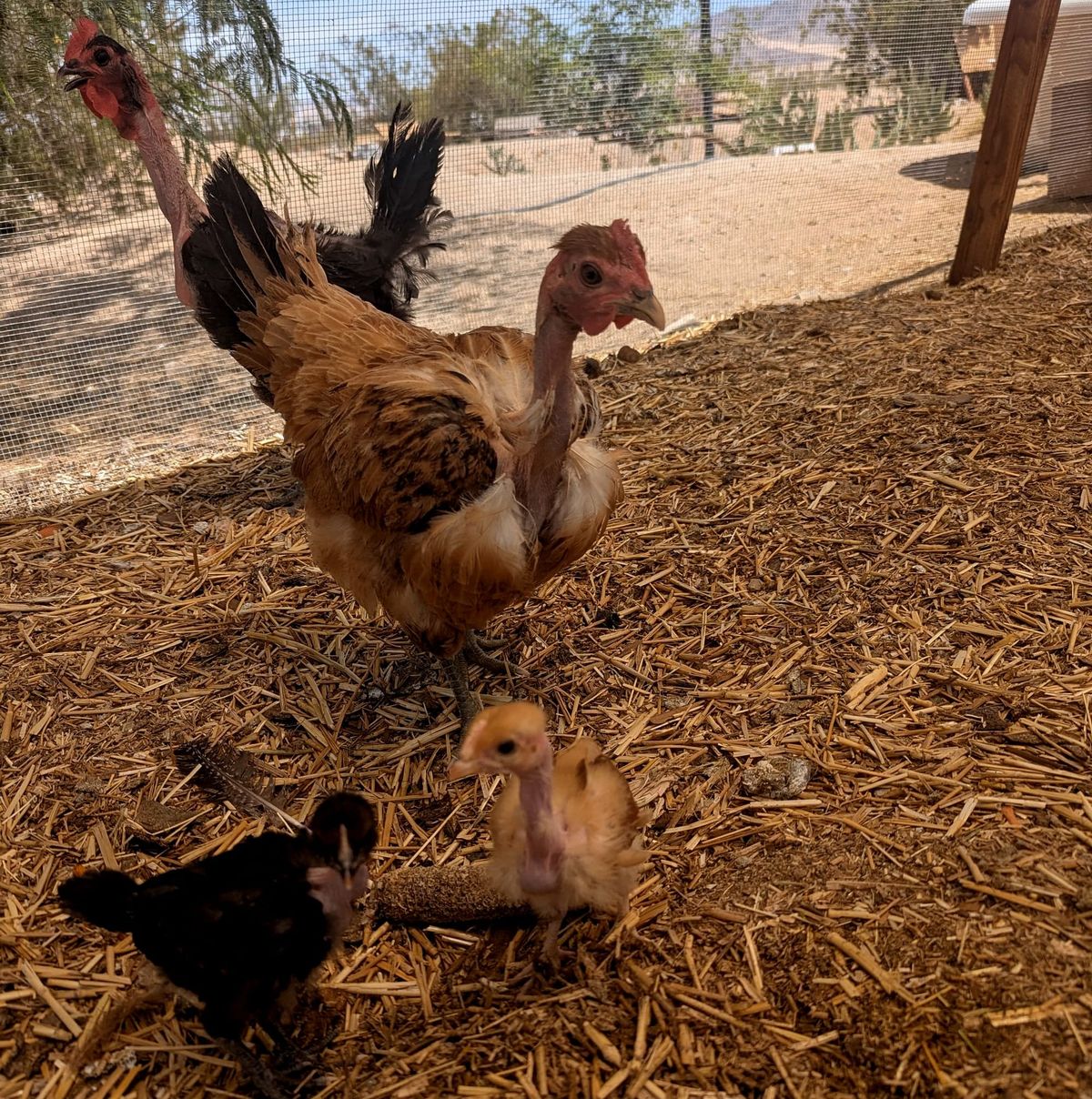
For most of you, if part of your year's work requires hands in the earth, your busiest season probably has just started in the last couple of months. For us, however, our seasons of growth are closing for a time and we are entering our season of rest.
It has taken some time to understand what seasons are here. California is said to have none, at least by those whose landscapes follow a clear "four" seasons - the four, of course, being those seasons that we teach our children are universal: Spring, Summer, Fall, and Winter. Locals know, however, that even on the mild coast there are clear seasons that don't necessarily fall neatly into the four aforementioned categories, and here the distinction between seasons is perhaps even more evident because our weather is so extreme.
While I don't yet know what names to give them, there are three seasons here which are actually quite amenable to cultivation if one pays attention and grows the right things. The first season runs approximately January through May and is our "Spring" growing season. I plant a short cool-season cover and then either a fast-growing warm-season annual or a small selection of longer warm-season crops if temperatures are amenable to germination early enough. Our first season is our windiest, usually, and so crop placement and variety are chosen with this in mind. Our second season is the hot season, and it used to not begin until mid May but this year it began early on in May – we're uncertain if this trend will continue – and it will be hot until mid-September but for the purposes of growing it ends in mid-August. In mid-August, we'll plant our second growing season's crops: usually warm-season varieties that will come to harvest before winter sets in, and another round of short cool-season cover crops are seeded as things are harvested. This is also the season in which we establish new trees and perennials: our rain comes in this season, between August and December, usually, and it also gives perennials the longest window for root-establishment before the extreme heat of midsummer.
It is this realization that has enabled us to begin increasing our capacity for cultivation, and this year, since January, we've been able to produce the following prior to taking a bit of a rest for the hot season:
- 44.5 pounds of vegetables
- 19 pounds of green fodder for animals
- 9.5 quarts of lard rendered from our own hogs
- 180.4 pounds of meat and offal (not including unrendered fat)
These numbers aren't just here to boast (and to our friends who run production farms they're not very impressive at all): but they mean we're feeding people. We purchased some seeds this past year, we've gotten nursery trees, and we purchase animal food but these are our only inputs. We have never purchased compost, fertilizers, root hormone, minerals, or any other typical garden inputs. It is anticipated that in the next two seasons we will surpass these quantities for both animal fodder and vegetables, and maintain meat production (as at this point it doesn't really need to increase) while reducing, slowly, our reliance on purchased animal feed. Truly eliminating feed as an input will take time, years perhaps, but I am working on formulating regional diets for our livestock which heavily utilize native plants and which help to utilize and manage problematic invasives. There will be more on this later, as this part of our project is in its young stages and more data is needed to give any concrete details with confidence[1].
Still, this year is the first year we will not be purchasing any meat from elsewhere. Next Spring we will be training pigs on electric fencing and begin utilizing them for soil decompaction on a broader scale than is possible without them. Y'all - we do not even purchase dog kibble or meat for our dog's food. We're slowly eliminating our household's need for purchased cooking oil. These things seem small but these are enormous steps towards food sovereignty and being able to share even more with our community. They are also slow steps towards becoming a closed-cycle farm, and potentially even being able to support ourselves from the land and moving away from the day-job that currently makes this feasible.
Last season, I teased the building of our rabbitry, which I'm pleased to say is now up and running. We've converted the aviary and extended it to create a four-stall hybrid colony setup where breeding can still be controlled carefully to avoid stressing our does[2] and having gestation or kitting[3] during extreme heat. Currently, Stall 1 houses our three does and Stall 2 houses our buck, and all of them can sniff one another and see each other through the divider so that there is still a semblance of social activity and no one is isolated. When we brought our rabbits home they were 7 weeks old, and they're now nearly full-sized and very impressive. More pictures and a detailed writeup of our plans for the rabbitry will be coming very soon, most likely as an entire dedicated page on this website.
Additionally, this coming rainy season we will be establishing our perennial guilds in the West garden and reducing or ending annual crop production in that section. Soil building efforts will continue, and will be increased on the East side where our November-planted trees are coming along quite well and will benefit from soil decompaction and the cultivation of better soil structure. I'll share more details about which species we're going to be growing and photos in the next quarter, as the Equinox approaches.
For now, we will be resting a bit. There is no more watering of the garden for a while (except our one tomato plant that's still hanging on and bearing fruit), save for the new trees, and while the stillness of summer will be broken by early-morning mesquite pod harvests and the cleaning of las tunas, the prickly pear fruits in July, for the most part we will be planning, preserving, preparing, and most importantly: praying for good rains.
Until next time ~
Notes
- It is easy to find nutritional data for common crops like oats or bermuda grass, but much more difficult to find data on the nutritional makeup of things like saltbrush or mesquite leaves. It is also slightly harder to find good data on the nutrional makeup of the oat greens, or to necessarily quantify how much of a given thing our chickens derive from the insects they eat. I'd love to crowdsource some of this data in the future, and some of it is irrelevant (I can assume if the chickens are laying eggs that are of good quality they're meeting their needs; other animals don't necessarily have such easy, relatively low-stake indicators of health).
- "Doe" is the appropriate term for a female rabbit.
- "Kitting" refers to the process of a rabbit having babies.