Quarterly Updates: the Season of Renewal
Read as we share how our land and lives have shifted since the Winter Solstice, and what the trajectory of the Ranch will be moving towards Summer.

March, 2026
Back in December, I had anticipated having very little to share at the dawn of this new Spring. Pleasantly, this is not the case.
This quarterly update marks a year since we began this endeavor to publicly share our work with folks beyond our landbase, and as I've prepared to write this one, I took some time to go back and read the prior four quarterly updates, and wow. It's astonishing the changes that have occurred in a solar cycle, and even more astonishing what's happened in the last two since we truly began digging down and working on rehabilitating the land. On a personal note, when we first began hosting for WWOOF, I was pregnant with our twins. For their entire lives up until this past December, and before, there were people in and out of their home. For our daughter, that year and a half or so that we were hosting makes up half of her entire life.
And in that time we've transformed: nuestra tierra, ourselves, our home. Our family has grown, shifted, changed shape, and in welcoming others into this space we've learned more than we ever would have on our own: what we are capable of as a familial unit, what we are capable of with help, how we receive and interpret what others have to share. We are still in the midst, it feels, of processing all of the lessons we've learned and all of the experiences we've been fortunate enough to share with some wonderful people throughout this time. Within this processing, plans are taking shape. Plans which fundamentally change the shape of this work, though unfortunately for now I cannot do more than continue to tease this.
As we look in all directions about ourselves, the work continues, however.
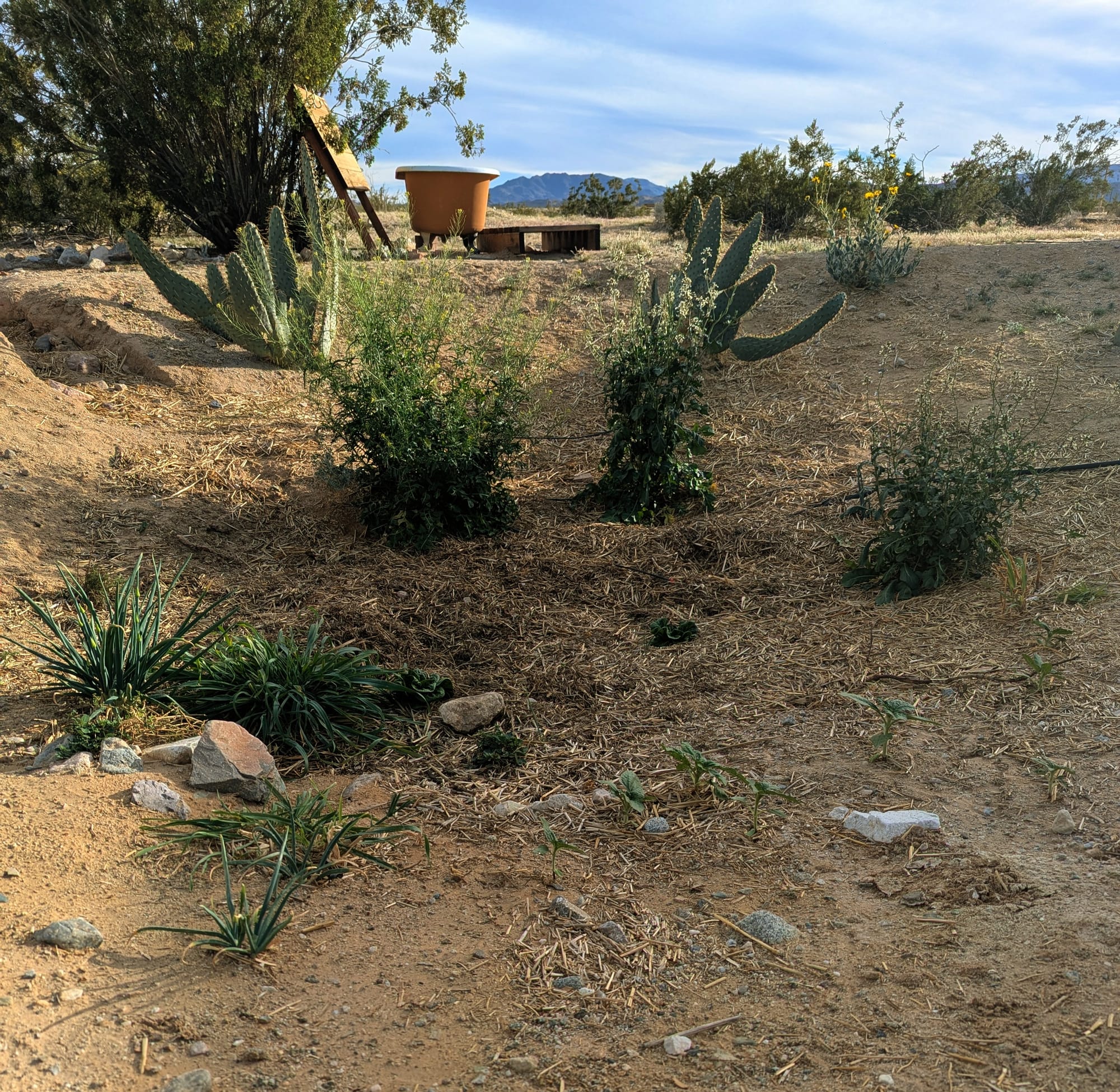
Our winter garden thrives. As it turns out, in January we did get a frost event that killed off most of our August plantings, and yet despite that this felt somewhat disappointing it made way for the new season's plantings. Early cool season crops are coming to harvest and some are being pulled as this post is written: lettuces, bitter greens, peas, radishes, turnips. Longer season crops are germinating as the cool season ones are removed: our summer and winter squashes are coming up, as are beans, corn, cilantro, chiles, and some peas that lagged behind the rest. We maintain beds of cover crops that will be harvested and fertilized by the chickens come their free-range season in late Spring and Summer, which, next Fall, will hopefully be ready for tree planting.
Okra, more chiles, and tomatoes went in this week as we prepare for the Equinox and hotter weather, and for this year that might be all that goes in for Summer. The chickens will need to range the garden to maintain adequate hydration and shade access in the heat, and we lack the bandwidth for fencing off enormous sections of our garden, and so careful timing of free-ranging and cautious placement of Summer vegetables will hopefully enable us to glean the pest-management benefits of the chooks without the total loss of our plants, but we will see. This will be the first Summer that a vegetable garden will really be kept throughout, and it is certainly an experiment, especially given record temperatures being set this month. We are mentally prepared for the likelihood that we don't get a harvest from this season, and are ready to be patient for the next if needed. As I've increased my knowledge of permaculture design principles and gained more seasons of observation in this environment, I've been continuously making plans for and doing the research on more native, perennial food options more likely to thrive in our environment. The more I learn through research, the more I understand that it is very likely that long-term, genuinely sustainable food production is going to rely on the utilization of small livestock to mimick species that are missing and critical in our environment, lots of tree crops, and accepting that because of how devastated this ecosystem is total self-sufficiency is unlikely, at least not without an unacceptable amount of extractive tradeoffs. The ancestors of this land, after all, were not often year-round residents, and that was when junipers and ricegrass and barrel cacti and chollas and mesquite still abounded – and today they do not. We are considering lessons, and we are, as always, listening.
It is amazing how much we are able to produce now, in our fourth year on this land. It took this long to be able to grow anything but native trees and cacti, and we're extraordinarily grateful to the land for enabling us to produce some of our preferred vegetables and greens, as well as a good amount of animal feed supplementation, on site this year even with our limited resources. This is, economically, an enormous benefit.
With that being said, we are poised to produce all of our own meat and eggs this year. We have not purchased eggs since last July or so, and we are now offering the surplus (because oh boy is there surplus) to friends and family. By the end of March, we are going to process the two pigs that we have been raising since December, and in April (approximately) will be bringing in two more growing hogs from the local pastured operation that up until this year has provided all of our meat.
We are also bringing home rabbits at the end of the month. While we were going to begin raising quail, we considered thoughtfully that our need for eggs is beyond met, and determined that quail aren't going to be the most efficient or sustainable choice for us this year. We also are considering the ecological impact of both species, and rabbits are going to fill a currently more empty niche. So, in the aviary we built, we are going to be raising a rabbit colony.
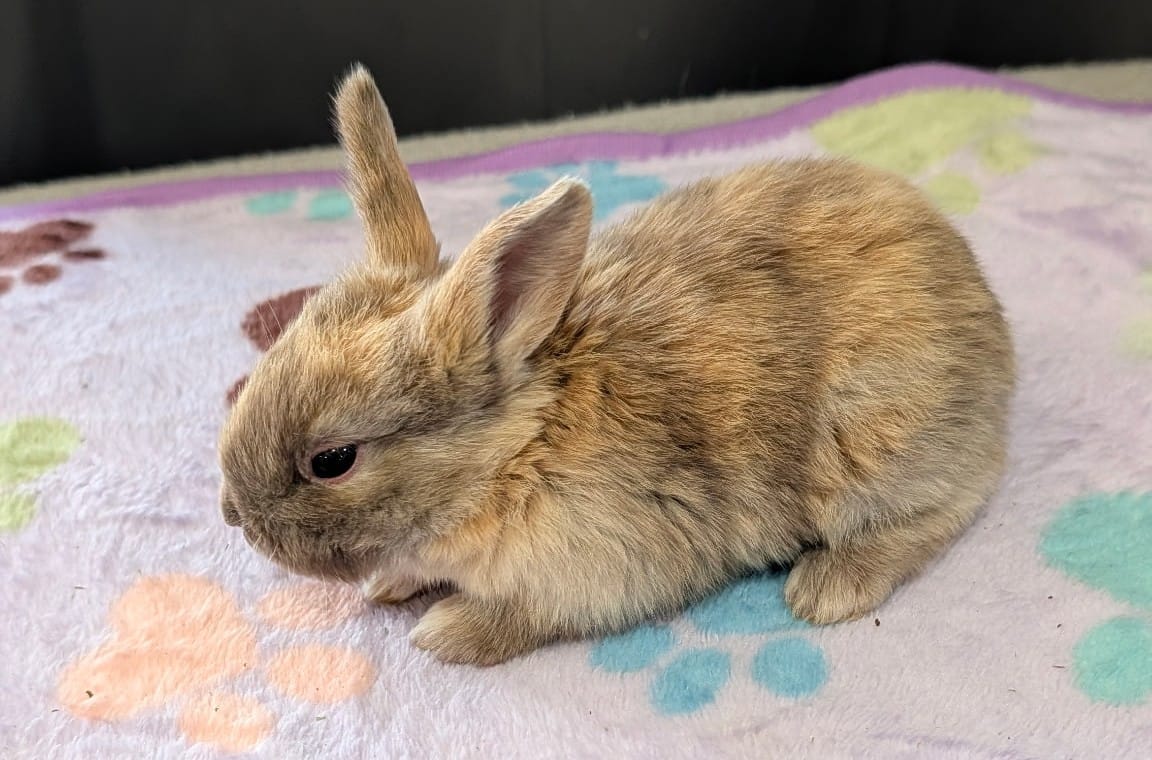
Because of their rapid reproduction and efficient conversion of feed to meat, as well as the potential for utilizing (or selling) pelts and bones, and that they can consume lots of the things that we find easy to grow in our garden, rabbits are a surprisingly sustainable choice. While quail are native, the processing time per ounce of meat and the difficulty that the variety of quail we were hoping to raise have with successfully brooding their own eggs in captivity made us change our minds. Additionally, quail need extremely high-protein game-bird feed, which would render us more reliant on purchased feed, surprisingly, than the rabbits will, though we will still need to bring in some grass hay and pellets for supplementation. If we had an effective way to range tiny flying birds that are an easy target for predators, that may be an option (a moveable tractor would theoretically work), though it isn't a this year endeavor, and the aviary was a better multipurpose piece of infrastructure, as it can be used for basically anything we choose.
Rabbits are cute, and we understand that in most of the US it's been quite a long time since rabbits were a primary or socially acceptable food source, but our considerations are all of those that have been outlined above: while we get parts of the land ready for tree planting, which is, as we've come to accept, really going to be the only sustainable way to aid the ecosystem's return long term, we can utilize animal allies which fill the niches that are no longer filled by the native residents of this ecosystem. In return, we can utilize some of these creatures to aid in feeding ourselves in economically and ecologically viable ways, which helps us remain present on this land to continue to get trees in the ground and build soil[1].
All of this to say: little in nature, of which we are a crucial part, has the space for sentimentality, and therefore our considerations are pragmatic and oriented towards long-term viability for that which we return to the land. Rabbits offer an opportunity to both conserve our economic resources and potentially produce income; their "waste" is going to be invaluable to our regeneration and soil-building efforts, and they neither take up a significant amount of space nor require a significant amount of food for what is produced in return. Cultivating this new relation is a step towards the ecosystem and space we've been working towards building, and we look forward to sharing more about it as this relationship evolves.
All in all, this season brings shifts in the way that we are orienting to the land as new knowledge and continuous observation initiates us into the acceptance of what is right in front of us: of what can be, and what should be, and what our part to play really is.
We appreciate you taking the time to follow along with our journey as we navigate what it is to be people embedded with the land, as we learn and remember, and step and make missteps. Next month I am going to embark on a Q&A post, this time released to everybody, not only paid subscribers. If you have any questions that you'd like to see answered in depth, we'd love to hear them! You can email them to ranchodelalibertad@protonmail.com before April 10th to have them included in our next post. Thank you for reading. Until next time ~
Notes
- An accompanying note on why we're continuing to invest energy and resources into the raising of livestock, and why we're looking at rabbits specifically:
There is a certain amount of protein and other nutrients that we need to consume to maintain our health, and while, yes, that protein could be found in a vegan diet (though Star suffered greatly when we were vegan, as this diet does not seem to work for him despite our best efforts to eat well and obtain good nutrition), our primary concern is producing the nutrients we need while rebuilding the ecological cycles of this land and producing those nutrients on site. There are both economic considerations and practical considerations: the volume and acreage of actual cultivable soil is limited. While we have enough land, in theory, to produce the amount of protein and other nutrients in plant matter, the reality is that we neither have enough water nor enough legitimately cultivable soil to do so. While all things being equal a single rabbit probably consumes more water than, say, a single chickpea plant to grow to slaughter, that rabbit also provides many more calories. In our environment, however, with the rate of transpiration and evaporation, this comparison between water drank and water given to a plant is no longer legitimate: water is excreted as urine from a rabbit (though frankly probably not in the percentage amount by body weight as it is evaporated from the soil or transpired from the plant's leaves), but that urine can be used as a plant nutrient when soaked into bedding: it doesn't just evaporate without leaving beneficial quantities of things like ammonia, nor does water just "evaporate" from a rabbit's stomach (or a chicken's, or a pig's). Contrarily, when we water crops we necessarily accept a certain amount of waste water to evaporation, increased by factors such as the extreme wind that we encounter, low humidity and excessive heat. Additionally, given other considerations such as water salinity and rainfall, we understand that neither the raising of livestock nor the rearing of annual vegetables are nor should be the end goal for our land. However, with that being said, while vegetables are technically cheaper to grow than animals (plant for plant, not by pound of edible food produced), our success rate at getting grains or nutrient dense vegetables to harvest is, at this point, still fairly low given other environmental factors, while our success rate for raising animals well is effectively 95% or so (accounting for the chickens we lost to predation last year). All in all, to grow the amount of plants which provide the same amount of calories as a single small animal, we expend a significant amount more water and energy at this point in our land's lifecycle.
Livestock additionally provide the benefit of benefitting from even failed crops and parts of crops that we cannot digest: nearly anything that sprouts but won't grow to harvest can be fed to a chicken, a pig, or a rabbit. We can also more easily grow crops that are better converted in the stomach of an animal than a human at this stage in our land regeneration process: for instance, oats won't usually grow to seed but the oat grass is loved by chickens and pigs, and it germinates at about 100% success, tillage radishes taste pretty bad but are quite high in protein and the pigs and chickens seem to love them; and the chickens and rabbits can consume the leaves and stalks of things that only produce roots or pods for us.
Animal feed, however, is an input, and it has a significant impact on other ecosystems. We purchase organic feed from small-scale producers, and supplement as much as possible with what's produced on our land or waste from the farmer's market. The waste from animals is not waste: it helps us build soil, and quite frankly is a crucial part of this whole process. We would never produce as much compost ourselves. Their presence is beneficial, and they convert to calories much better than the plants we're currently capable of growing. At this stage, we are cultivating semi-temporary alliances with beings who fill crucial ecological niches and provide food for us, which is all in preparation for stepping back. No matter the choice, there are tradeoffs, and we have chosen ours.
I write the above to share how we are considering our impact in-depth and from multiple angles, not necessarily to exonerate us from some perceived wrong, because we recognize that there are trade offs, and difficult decisions are being made all the time to orient towards a more ethical life.